
Acupuncture for Headaches and Migraines in Manhattan
For many people, headaches aren't occasional inconveniences — they're recurring events that reorganize your week around them. Whether you're managing debilitating migraines that arrive on a near-weekly schedule or tension headaches that settle in by afternoon and won't let go, acupuncture offers a drug-free path to fewer episodes and a nervous system that isn't perpetually braced for the next one.
One of Acupuncture's Most Clinically Recognized Applications
Headaches and migraines aren't a niche use case for acupuncture — they're among its most studied and well-supported ones. The World Health Organization includes both tension-type headaches and migraines on its list of conditions for which acupuncture has demonstrated therapeutic benefit, and a growing body of clinical research supports acupuncture as an effective preventive migraine treatment.
The treatment mechanism is real: acupuncture modulates pain signaling through the nervous system, reduces neurogenic inflammation, and promotes the kind of sustained nervous system regulation that makes the brain less reactive to migraine triggers over time.
Two Different Headache Patterns, One Effective Approach
Not all headaches respond to treatment the same way, and I think about them in two distinct categories.
Migraines — the kind that come with light sensitivity, nausea, visual disturbance, or throbbing pain that sidelines you for hours or days — often require a preventive cadence. Many of my migraine patients come in weekly or every other week not because they're in crisis, but because consistent treatment keeps the frequency down. The goal isn't just to manage an episode after it starts. It's to reduce how often your brain reaches that threshold in the first place.
Tension headaches are a different presentation: the band of pressure across the forehead, the tightness at the base of the skull, the headache that builds through a long workday or a stressful week. These respond well to acupuncture's ability to release muscular holding patterns in the neck, shoulders, and upper back — the physical structures that feed directly into headache onset — and to reset the nervous system's baseline tension level.
Why Preventive Care Changes the Equation
The standard approach to headaches is reactive: take something when one starts, get through it, and wait to see what happens next. That's not a plan — it's a cycle. And for people whose migraines come weekly or whose tension headaches are a near-daily presence, it's an exhausting one.
Preventive acupuncture works differently. With regular treatment, most patients notice that headaches become less frequent before they become less severe. The nervous system gradually stops operating in a state of heightened reactivity. Triggers that used to reliably produce a migraine start producing a mild headache, or nothing at all. That shift — from damage control to genuine prevention — is what makes acupuncture worth considering as a long-term strategy rather than a last resort.
Chronic migraine treatment through acupuncture is most effective when approached as a course of care rather than a single session. I'll give you an honest picture of what to expect and how long it typically takes to see meaningful change.
Types Of Conditions I Commonly See
Patients who come to me for headache and migraine care tend to fall into a few recognizable groups:
- People with chronic migraines who want to reduce their frequency
- Patients whose doctors have suggested acupuncture as a complement to their existing migraine management plan
- Professionals whose tension headaches have become a near-daily presence tied to screen time, stress, and postural strain
- Runners and active people whose headaches cluster around training load, dehydration, or hormonal fluctuation
- Women whose migraines are clearly tied to their cycle — perimenstrual migraines are one of the most common patterns I treat
- People who've tried medications and found the side effects or rebound headaches worse than the condition itself
Frequently Asked Questions
I practice at 928 Broadway, Suite 604, between 21st and 22nd Streets in Manhattan's Flatiron District — a genuine neighborhood location, not a borrowed address. I hold a Master's degree from Pacific College of Health and Science, am licensed by New York State, and am board certified in acupuncture. I receive referrals from medical doctors and OB/GYNs, and I'm comfortable working alongside conventional care — including patients who are managing migraines with neurologists and want acupuncture as a complementary layer.
Every session is with me directly. There are no associates, no rotating staff, and no variation in who you'll see when you walk through the door.
How many acupuncture sessions does it take to see improvement in migraines?
Most patients notice some change within four to six sessions, though this varies based on how long the pattern has been established and how frequent the migraines are. Preventive migraine care works best as a sustained course of treatment — I'll give you a realistic timeline after your first visit.Can acupuncture help with tension headaches, or is it mainly for migraines?
Both respond well. Tension headaches — the kind driven by muscular tightness in the neck, shoulders, and upper back — are often among the most straightforward presentations to treat. Acupuncture addresses the physical holding patterns and nervous system dysregulation that feed into them directly.Is acupuncture for headaches backed by research?
Yes. The World Health Organization lists tension-type headaches and migraines among the conditions for which acupuncture has demonstrated benefit, and multiple clinical trials have shown acupuncture to be effective for migraine prevention. I'm happy to discuss the research with you if that's helpful.Do you treat hormonal migraines tied to the menstrual cycle?
Yes, this is one of the most common patterns I see. Acupuncture addresses both the hormonal fluctuation that triggers them and the nervous system sensitivity that amplifies the response — treating the cycle as a whole rather than just the headache in isolation.What's included in a headache treatment session?
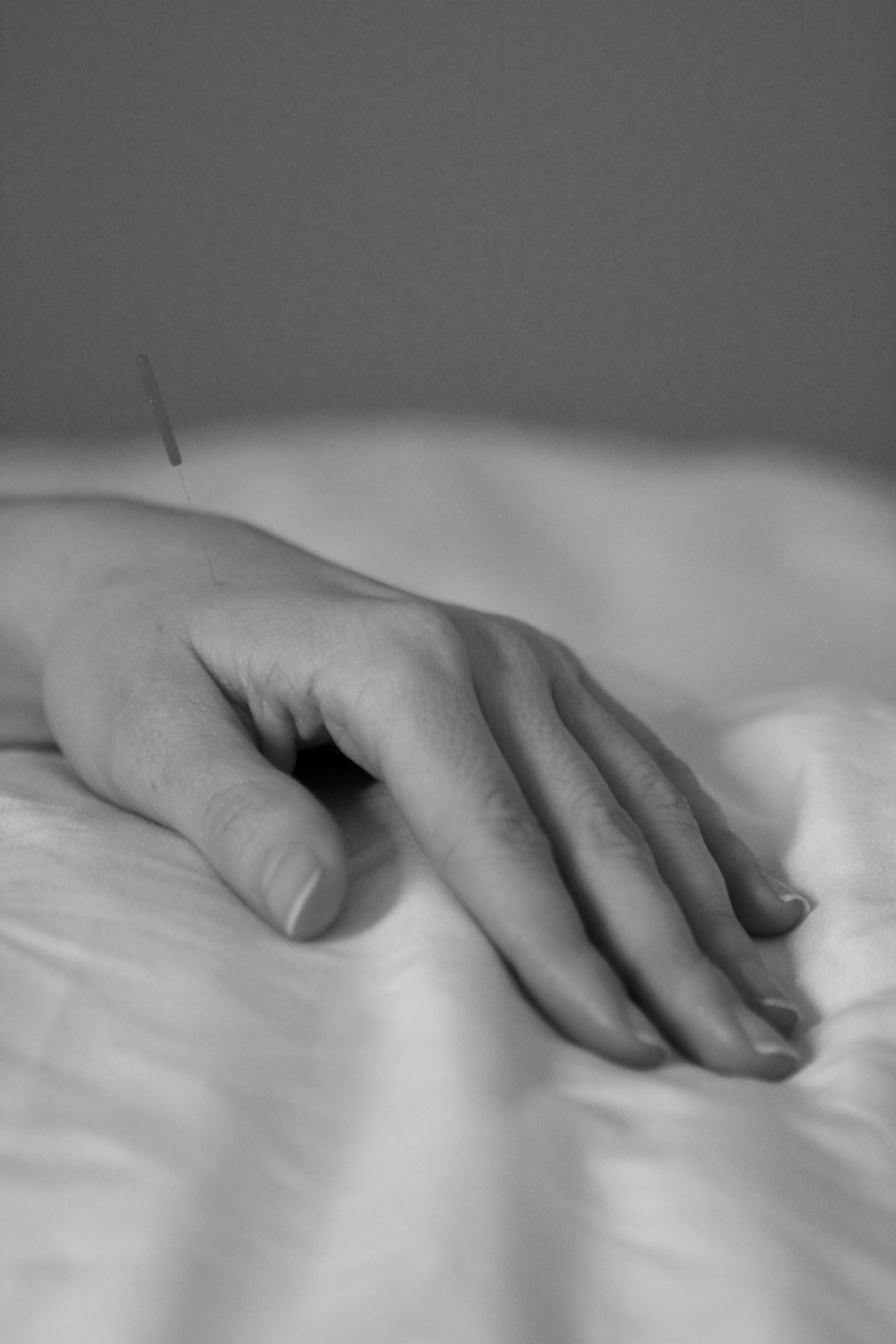
Every session begins with a focused intake, followed by acupuncture tailored to your specific pattern. Depending on what's indicated, I may also incorporate cupping or gua sha. All complementary modalities are included in the standard session fee.
I see patients for headache and migraine care from across Manhattan and the surrounding area — including Gramercy, Union Square, Chelsea, and NoMad — as well as patients traveling from Brooklyn, Long Island City, and northern New Jersey. If you're ready to move from managing headaches to preventing them, I'd be glad to help.