A Reset Button for an Overstimulated Nervous System
Your body was not designed to run at New York City's pace indefinitely. When the subway is delayed, the inbox is full, and the to-do list never shortens, your nervous system stays locked in fight-or-flight — and eventually, that becomes your baseline. Acupuncture for anxiety and stress works by interrupting that cycle, shifting your physiology from high-alert into the rest-and-digest state where real recovery happens.
When "Wound Up" Stops Feeling Like a Phase
There is a version of stress that passes after a hard week. Then there is the version that becomes background noise — the low-grade hum of tension you carry in your jaw, your shoulders, your chest. Anxiety that shows up as a racing mind at 2 a.m. Depression that feels less like sadness and more like flatness. A mood that swings on a schedule you cannot predict.
These are not character flaws or signs you need to push harder. They are signals from a nervous system that has been running on overdrive for too long. I work with patients navigating all of these — anxiety, mood disorders, low-grade depression, and what many people simply describe as never being able to switch off.
What Acupuncture Actually Does to Your Nervous System
The mechanism is not mysterious. Acupuncture stimulates specific points that activate the parasympathetic nervous system — the branch responsible for calming the body down. Research has documented measurable changes in cortisol levels, heart rate variability, and endorphin release following acupuncture treatment. These are the same physiological markers your physician would use to assess stress load.
In plain terms: the needles signal safety to a body that has forgotten what that feels like. Your heart rate slows. Your breath deepens. The mental chatter that follows you everywhere goes quiet for a while — and over a course of treatment, that quiet starts to extend beyond the session itself.
One Quiet Hour in the Middle of Manhattan
My practice is in the Flatiron District, one block from Madison Square Park. You can walk here from Gramercy, Union Square, Chelsea, or NoMad in under fifteen minutes. Patients come from all over NYC and the larger metropolitan area.
What I Treat in This Category
I see a wide range of presentations that fall under the stress and mental health umbrella. Some patients arrive with a formal diagnosis. Many arrive simply knowing something is off.
- Generalized anxiety and chronic worry
- Panic attacks and acute stress responses
- Low mood, mild to moderate depression, and emotional flatness
- Burnout and adrenal fatigue
- Irritability, mood swings, and emotional dysregulation
- Stress-related physical symptoms — tension headaches, jaw clenching, digestive upset, and disrupted sleep
Acupuncture is a complementary approach, not a replacement for mental health treatment or psychiatric care. Many of my patients work with therapists or psychiatrists alongside their sessions, and I am glad to be part of that team.
What a Session Looks Like
The first visit begins with a full intake — we talk through what is happening in your body and your life before a single needle is placed. From there, I build a treatment plan around your specific pattern, not a generic anxiety protocol.
Most sessions include acupuncture as the foundation, with complementary modalities added based on what your system needs that day. Cupping, ear seeds, and infrared heat therapy are included in standard treatments at no additional charge. Some patients feel a noticeable shift after the first session. For most, a meaningful change in baseline stress and mood becomes apparent over four to six visits.
Frequently Asked Questions
I spent a decade in NYC hospital healthcare marketing before training at Pacific College of Health and Science. I understand how biomedicine thinks about stress, anxiety, and mental health — and I explain acupuncture in language that makes sense alongside that framework. Many of my patients are referred by their physicians and OB/GYNs, and some arrive skeptical. That is fine. The results tend to do the explaining.
- Master's-trained, NY State licensed, and nationally board certified
- Solo practice — every session is with me, not a rotating staff member
- Former hospital healthcare marketing background at NewYork-Presbyterian and Columbia
- Receives referrals from MDs and OB/GYNs across Manhattan
- Cupping, gua sha, ear seeds, and infrared heat therapy included in standard sessions
- Located at 928 Broadway, Suite 604 — genuinely in the Flatiron District
Can acupuncture help with anxiety if I am already taking medication?
Yes. Acupuncture is a complementary therapy and works alongside psychiatric medication, not against it. Many patients use acupuncture to support their existing treatment plan and find it helps manage symptoms between medication adjustments. Always keep your prescribing provider informed about any complementary care you are receiving.How quickly will I notice a difference in my stress or anxiety levels?
Some patients feel a meaningful shift in mood and tension after the first session. For most people, a reliable change in baseline anxiety and stress becomes apparent over four to six treatments. The effects tend to compound — each session builds on the last, and many patients find that the calm extends further into the week as the course progresses.Is acupuncture a substitute for therapy or psychiatric care?
No, and I am transparent about that from the start. Acupuncture is a supportive, complementary approach. If you are working with a therapist or psychiatrist, acupuncture can be a valuable addition to that care — not a replacement for it. If you are not currently in mental health treatment and your symptoms are significant, I will encourage you to pursue that alongside our work together.What does acupuncture for anxiety actually feel like during the session?
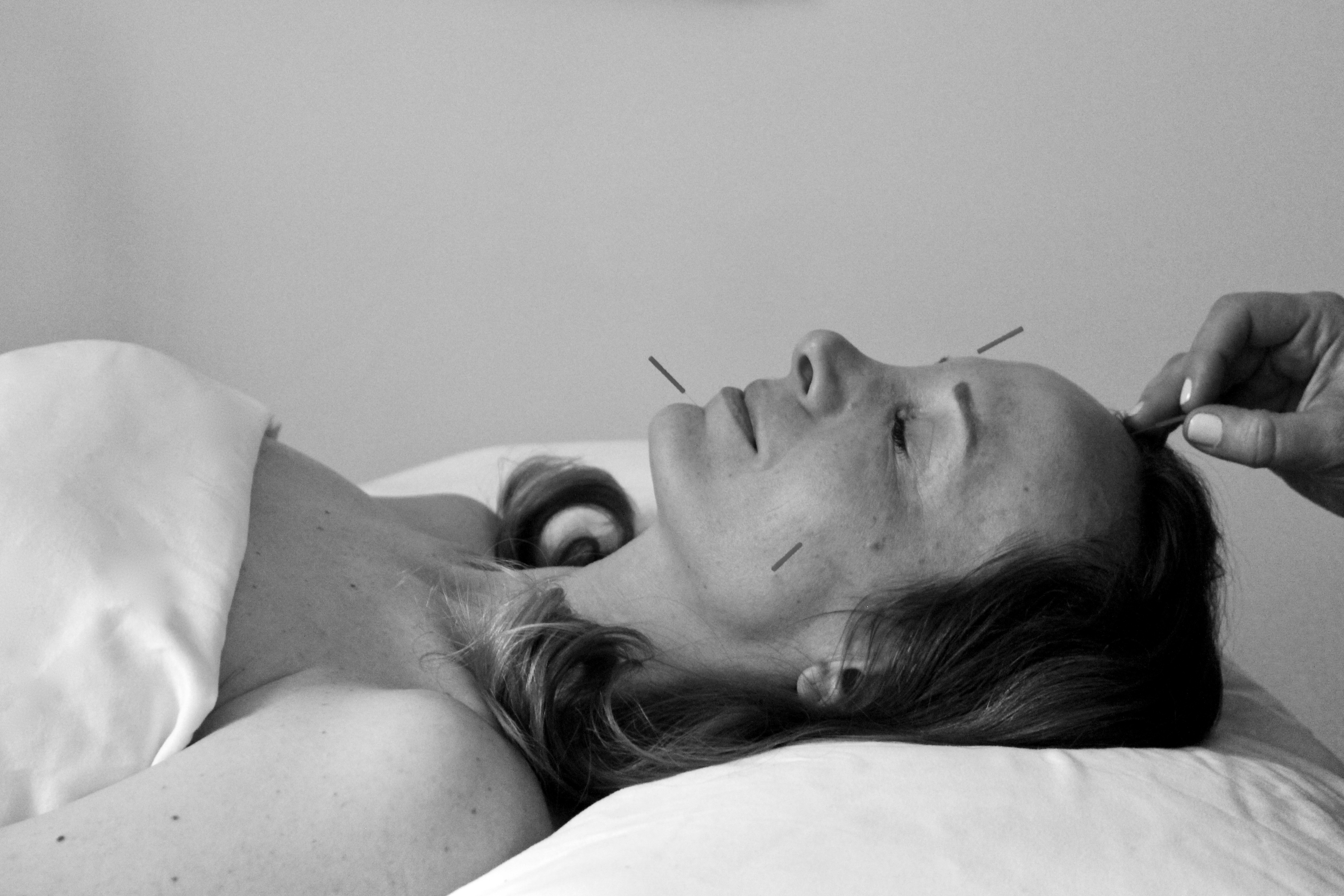
Most patients are surprised by how relaxing it is. The needles are hair-thin, and the sensation — if you feel anything at all — is typically a mild heaviness or warmth at the point. Within a few minutes of the needles being placed, most people enter a deeply relaxed state. Some fall asleep. The hour tends to feel much shorter than it is.How is this different from just taking time to rest or meditate?
Rest and meditation are valuable, and I encourage both. Acupuncture works at a physiological level that intentional relaxation alone does not always reach — particularly when the nervous system has been in chronic overdrive. It produces measurable changes in cortisol, heart rate variability, and endorphin release. For many patients, acupuncture is what makes other stress-reduction practices start to feel accessible again.Do you treat depression with acupuncture?
I work with patients experiencing low mood, emotional flatness, and mild to moderate depression as part of a broader care plan. Acupuncture supports mood regulation and can be a meaningful complement to therapy, medication, or both.
Kathleen Samstein is a New York State licensed acupuncturist and nationally board certified practitioner based in Manhattan's Flatiron District. She holds a Master's degree from Pacific College of Health and Science and brings a decade of NYC hospital healthcare experience to a practice built around evidence-respecting, one-on-one care. To learn more about her background and training, visit the About page.