
Acupuncture for Insomnia and Sleep Support in NYC
Poor sleep doesn't just make you tired — it makes everything harder. When your nervous system can't wind down at night, it shows up in your mood, your pain levels, your digestion, your ability to focus, and your capacity to handle the ordinary demands of the day. I treat sleep as foundational, because in my experience, it is: help the body rest, and the rest of the picture often begins to shift.
Why Sleep Is So Hard to Fix on Your Own
The problem with insomnia is rarely just the insomnia. Most people who lie awake at night aren't failing to sleep because of a single, isolated cause — they're caught in a loop of accumulated stress, a nervous system running too hot, hormonal shifts, or a mind that won't quiet down long enough for sleep to take hold. Sleep aids can interrupt the loop temporarily, but they don't address what's keeping the system activated in the first place.
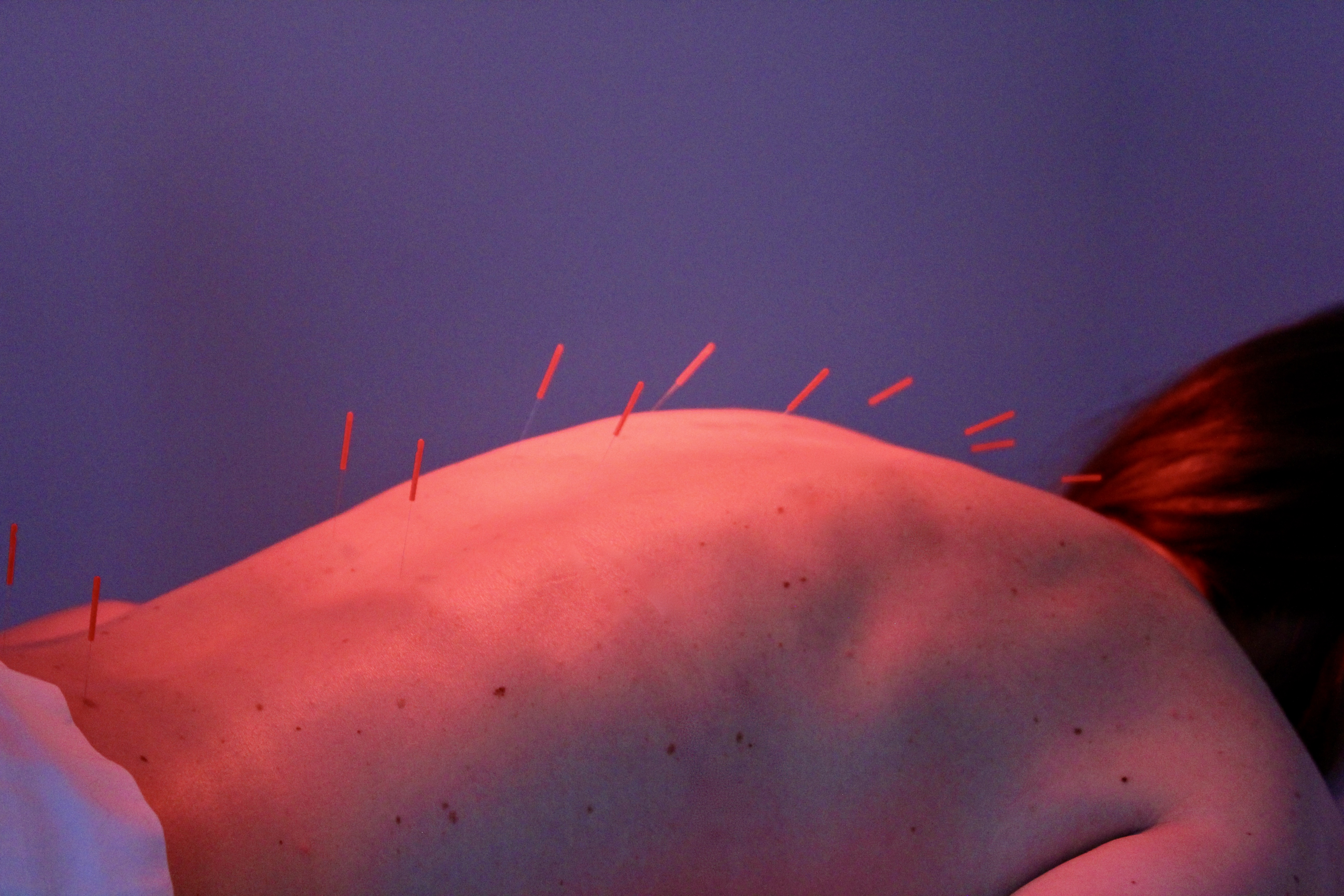
Acupuncture works differently. By engaging the body's own regulatory pathways, treatment helps calm the nervous system at a physiological level — signaling a shift from the activated, alert state that keeps sleep out of reach toward the quieter state where rest becomes possible. Many patients notice a deep, almost immediate sense of calm during treatment itself. That's not incidental — it's the mechanism.
What Restless Sleep Is Telling You
In Traditional Chinese Medicine, sleep disturbances are understood as expressions of imbalance — not character flaws or inevitable consequences of a busy life. The pattern matters: whether you struggle to fall asleep, wake in the early hours and can't return, dream heavily, or feel unrested despite a full night in bed, each pattern points to something specific about where the system is out of balance.
Common patterns I see in practice include:
- Difficulty falling asleep linked to an overactive mind and elevated stress
- Waking between 1–3 a.m., often connected to emotional disharmony or hormonal fluctuation
- Unable to stay asleep, or light, unrefreshing sleep with vivid dreaming
- Restless sleep tied to anxiety, chronic pain, or perimenopausal hormonal shifts
- Exhaustion that doesn't resolve with rest
Understanding your specific pattern is how I build a treatment plan that actually addresses your sleep — not a generic protocol, but a targeted approach to what's happening in your body.
How Sleep, Stress, and the Rest of Your Health Connect
Sleep and stress rarely travel alone. If you're lying awake at night, there's a strong chance anxiety is part of the picture — and if anxiety is part of the picture, it's likely affecting more than just sleep. I see this pattern constantly in my practice: poor sleep feeds stress, stress disrupts sleep further, and together they begin to erode digestion, pain tolerance, emotional resilience, and overall health.
This is why I treat sleep in the context of the whole person. Acupuncture sessions address the nervous system dysregulation underlying both poor sleep and anxiety at the same time. If stress and anxious thoughts are a significant part of what's keeping you awake, the stress and anxiety treatment page goes deeper into how I approach that layer of the picture.
A Drug-Free Approach That Doesn't Create New Problems
One of the most common concerns I hear from patients is that they don't want to depend on sleep aids to function. That concern is reasonable. Acupuncture for insomnia offers a different path: it supports the body's own capacity to regulate sleep without creating dependency, tolerance, or morning grogginess.
Treatment is non-habit-forming by nature. The goal is to restore the conditions under which your body can sleep on its own — not to substitute one crutch for another. Over a course of treatment, most patients find that sleep becomes more reliable, the anxious edge around bedtime softens, and the exhaustion that had been compounding gradually lifts.
What to Expect from Acupuncture for Sleep
Sessions are one-on-one — every appointment is with me, not a rotating associate. Before we begin, I take time to understand your sleep history, your stress load, your cycle if relevant, and any other factors that may be contributing. That intake shapes the treatment, and the treatment evolves as your sleep does.
Most patients feel noticeably relaxed during and immediately after their first session. Over a course of around four weekly visits, that relaxation tends to carry further into the days between appointments, and appointments can move to a maintenance model. Cupping, ear seeds, and infrared heat therapy are included in standard sessions at no additional charge — these complementary modalities support the nervous system work we're doing with acupuncture and can extend the calming effect between visits.
Frequently Asked Questions
Acupuncture for sleep works for a wide range of people and presentations. I regularly work with:
- Professionals whose minds won't stop at night, even when their bodies are exhausted
- Women experiencing sleep disruption tied to perimenopause, menopause, or hormonal fluctuation across the cycle
- People whose chronic pain — sciatica, tension headaches, musculoskeletal issues — makes it hard to stay asleep
- Patients who've tried sleep aids and want a path that doesn't involve long-term medication
- Individuals whose anxiety and sleep problems are so intertwined it's hard to know which came first
- MD- and OB/GYN-referred patients looking for a credentialed, evidence-respecting practitioner to complement their medical care
If you're not sure whether your sleep pattern is something I can help with, reach out — I'm happy to talk through what you're experiencing before you book.
How does acupuncture help with insomnia?
Acupuncture engages the parasympathetic nervous system — the branch responsible for rest and recovery — helping to quiet the activated state that keeps many people awake. Research suggests it may influence neurotransmitters involved in sleep regulation, including serotonin and GABA. In practice, patients often notice a pronounced sense of calm during treatment that carries into improved sleep over a course of sessions.How many sessions will I need before my sleep improves?
Many patients notice some shift in sleep quality within the first two to four sessions, though the timeline varies depending on how long the insomnia has been present and what's driving it. Chronic, longstanding sleep issues typically benefit from a more sustained course of treatment. I'll give you a realistic sense of what to expect after your first visit.Is acupuncture for sleep safe if I'm already taking a sleep medication?
Yes. Acupuncture is non-pharmacological and does not interact with sleep medications. Many patients come to me specifically because they want to reduce their reliance on medication over time — we can work toward that goal gradually and in coordination with your prescribing physician.Can acupuncture help if my sleep problems are related to anxiety or stress?
Absolutely — this is one of the most common presentations I treat. Anxiety and insomnia are deeply connected, and acupuncture addresses the nervous system dysregulation underlying both simultaneously. Patients often find that as sleep improves, the anxious edge around bedtime softens as well, and vice versa.What if my poor sleep is tied to hormonal changes or perimenopause?
Hormonal shifts are one of the most frequent contributors to sleep disruption I see, particularly in women navigating perimenopause and menopause. TCM has well-developed frameworks for addressing the patterns associated with these transitions — night sweats, early waking, restless sleep — and acupuncture can be an effective part of a broader support plan during this time.Do I need a referral to book an appointment for insomnia?
No referral is needed. You can book directly through my online scheduling system. That said, I do receive referrals from medical doctors and OB/GYNs, and I'm happy to coordinate with your existing care team if that's helpful.
Your body already knows how to sleep. Sometimes it just needs help remembering. I practice at 928 Broadway, Suite 604, in the Flatiron District — convenient to Gramercy, Union Square, Chelsea, and NoMad, and accessible to patients coming from every NYC borough. If you're ready to stop dreading bedtime, I'd be glad to help you find your way back to rest.