Acupuncture for Pain Relief in NYC — For Athletes, Runners, and Chronic Pain Patients Who've Tried Everything Else
If you've cycled through cortisone injections, physical therapy, NSAIDs, and maybe even a surgical consult — and you're still in pain — you're not out of options. Acupuncture for pain in NYC works differently than anything you've tried before, because it works with your nervous system rather than around it. Whether you're a marathon runner trying to stay on the road or someone who's been managing sciatica for years, I treat the underlying pattern driving your pain, not just the symptom in front of me.
Two Kinds of Pain Patients Walk Through My Door
The first is acute pain. Maybe a runner, perhaps you're training for the New York City Marathon, or you're a weekend warrior who logs miles in Central Park and refuses to sit out a race. Your pain is new, your timeline is real, and you need recovery that keeps pace with your training schedule.
The second is the chronic pain patient — someone with sciatica, a bulging disc, scoliosis, TMJ, or hip pain that's become a fixture of daily life. These patients often come in after nothing they’ve tried has worked. Both deserve better than managing symptoms indefinitely.
I've treated both groups for years, and I was a runner myself. I understand what it means to need your body to perform, and I understand what it means to feel like conventional medicine has reached its limit.

Conditions I Treat Most Often
Acupuncture addresses a wide range of musculoskeletal and pain conditions. The following are among the most common presentations I see in my Flatiron practice:
- Sciatica and lumbar radiculopathy
- Chronic low back pain and disc issues
- Scoliosis-related discomfort and muscle tension
- Hip pain, IT band syndrome, and piriformis syndrome
- TMJ dysfunction and jaw pain
- Neck pain and cervicogenic headaches
- Plantar fasciitis and Achilles tendinopathy
- Runner's knee, shin splints, and stress fractures in recovery
- Post-surgical pain and scar tissue management
- Shoulder impingement and rotator cuff strain
If your condition isn't listed here, reach out. Acupuncture for chronic back pain, sports injuries, and structural pain is a broad category — if it's a pain pattern, I've likely treated it.
What a Pain Treatment Session Looks Like
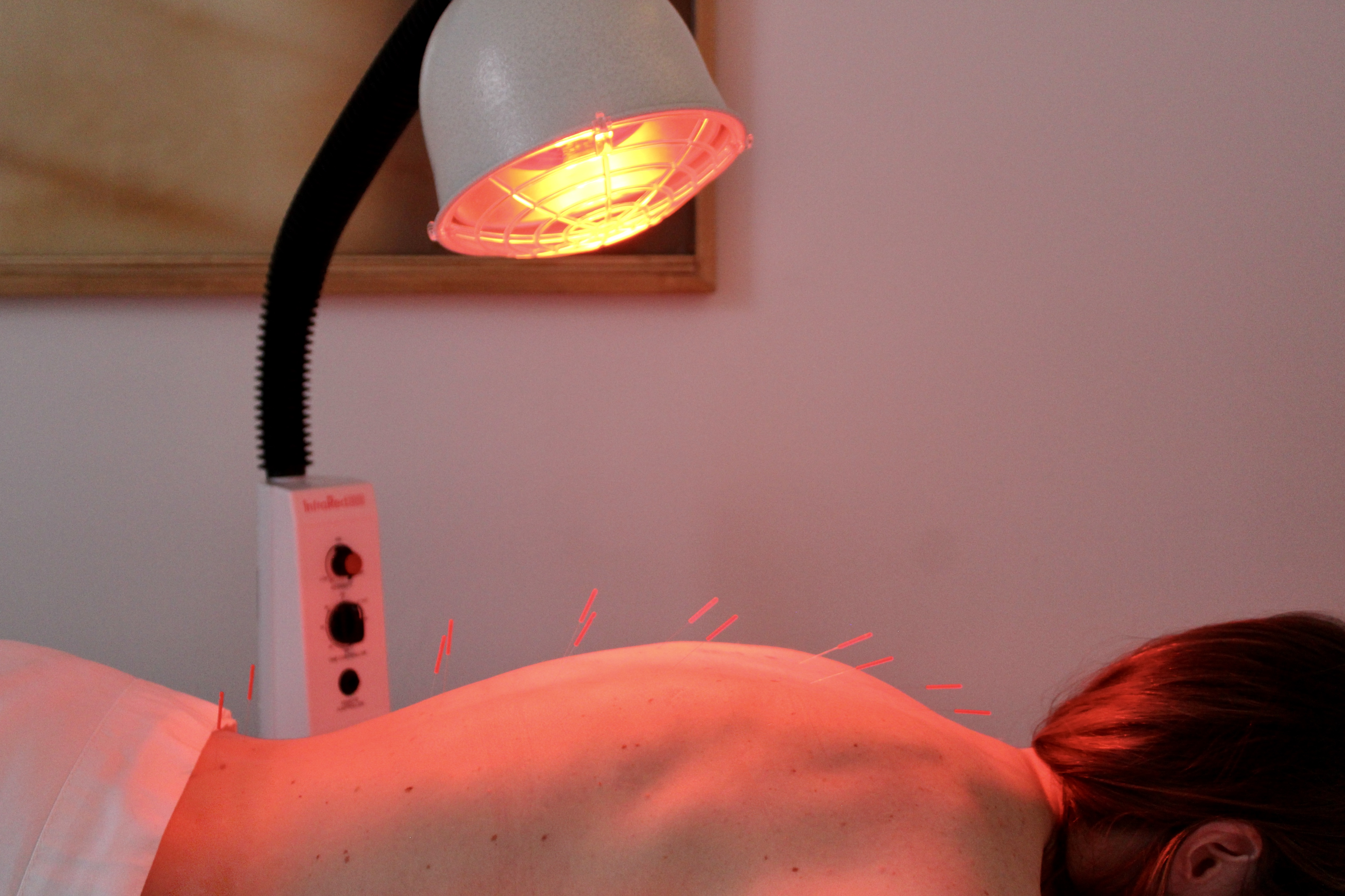
Every session is one-on-one with me — there's no rotating associate, no intake with one person and treatment with another. I take a detailed history of your pain pattern: when it started, what aggravates it, what partial relief you've found, and what your goals are. From there, I develop a point protocol tailored to your presentation.
For pain and orthopedic cases, I frequently integrate the following modalities at no additional charge:
- Cupping and gua sha: Both increase blood flow to injured or restricted tissue, break up fascial adhesion, and accelerate recovery. Runners and athletes respond especially well.
- Heat therapy (moxibustion): Applied to cold or deficient patterns — common in chronic hip pain and lower back conditions — to restore circulation and ease stiffness.
- Electro-acupuncture: Low-frequency electrical stimulation through acupuncture needles to enhance muscle relaxation and pain modulation.
These aren't add-ons billed separately. They're part of how I treat pain, included in every standard session.
How Acupuncture Relieves Pain Without Medication
Acupuncture stimulates the nervous system to release endorphins and reduce inflammatory signaling — the mechanisms are well-documented in peer-reviewed research and recognized by major medical institutions. For musculoskeletal pain specifically, acupuncture increases local circulation, reduces muscle guarding, and down-regulates the pain response at the spinal cord level. This is why patients with chronic pain often feel relief that outlasts a single session and compounds over a course of treatment.
Unlike NSAIDs or cortisone, acupuncture has no systemic side effects and no ceiling on how long you can use it. You can come in weekly for months without the concerns that accompany long-term medication use. That repeatability is one of the most important things I offer patients who are done counting pills and looking for a sustainable path.
Built for NYC Runners and Athletes
New York's running community is serious. Whether you're training for the New York City Marathon or running in the park on the weekends, your body takes a real beating — and your recovery window is short. I work with runners at every level on injury prevention, active recovery between training cycles, and acute injury management when something goes wrong mid-training.
Acupuncture for runners works on multiple levels: it reduces delayed onset muscle soreness, addresses the overuse patterns that lead to injury, and keeps the nervous system regulated during high-volume training blocks. Many of my running patients come in on a regular maintenance schedule, not just when something hurts. That's the difference between reactive and proactive care — and it's the approach that keeps you racing.
Frequently Asked Questions
I receive referrals from physicians, trainers, and orthopedic specialists across NYC, and I understand why that trust matters to you. Before I trained at Pacific College of Health and Science, I spent a decade in healthcare marketing at NewYork-Presbyterian and Columbia — I'm fluent in how conventional medicine thinks about pain, and I communicate clearly with referring providers when patients want that coordination.
My approach is evidence-respecting and transparent. I don't ask you to abandon your medical care — I work alongside it. If your orthopedist has recommended conservative management before surgery, or if you're looking for drug-free relief to complement your existing treatment plan, acupuncture belongs in that conversation. I'm New York State licensed and nationally board certified, and I treat every referral with the clinical seriousness it deserves.
How many acupuncture sessions will I need for chronic back pain or sciatica?
Most patients with chronic pain conditions see meaningful improvement within four to eight sessions. The timeline depends on how long the condition has been present, its severity, and how your body responds. I'll give you a realistic treatment plan at your first visit and reassess as we go.Is acupuncture for pain backed by research?
Yes. Acupuncture for musculoskeletal pain has a substantial body of clinical evidence behind it. The National Institutes of Health and major academic medical centers recognize acupuncture as an effective intervention for low back pain, neck pain, osteoarthritis, and headache. I'm happy to discuss the research with you at your first appointment.Can acupuncture help if I've already had back surgery?
Often, yes. Post-surgical pain, residual nerve irritation, and scar tissue are all conditions acupuncture can address. I work with post-surgical patients regularly and will take a careful history to ensure the treatment approach is appropriate for your specific situation.Do you treat TMJ with acupuncture?
TMJ acupuncture is one of the more consistently effective applications I see in practice. Points around the jaw, temples, and neck reduce muscle tension, decrease inflammation in the joint, and interrupt the pain-clenching cycle that drives most TMJ dysfunction. Many patients see significant relief within a handful of sessions.Is acupuncture safe to use alongside NSAIDs or other pain medications?
Yes. Acupuncture is compatible with most pain management medications and can often reduce your reliance on them over time. I'll review your current medications and health history at intake to ensure there are no contraindications.Do you work with runners who are currently in training — not just injured?
Absolutely — and I'd encourage it. Maintenance acupuncture during active training helps manage overuse patterns before they become injuries, supports recovery between hard efforts, and keeps the nervous system regulated under training load. Many of my running patients come in on a regular schedule throughout their training cycle.
Pain that's been present for months or years rarely resolves in a single session — but most patients notice a meaningful shift within three to six treatments. Acute injuries and sports-related pain often respond faster. Chronic structural conditions like sciatica or scoliosis-related tension typically benefit from a longer course of weekly treatment, tapering to a maintenance schedule once stability is established.
Kathleen Samstein is a New York State licensed acupuncturist and nationally board-certified practitioner with a Master's degree from Pacific College of Health and Science. She treats pain, orthopedic conditions, and sports injuries at her private practice in Manhattan's Flatiron District, where she sees patients one-on-one at every visit. Her practice receives referrals from physicians and orthopedic specialists across the city. To learn more about her background and training, visit the about page.